The Importance of Dental Sealants: A Simple Solution for Long-Term Oral Health

When it comes to maintaining a healthy smile, many people think of brushing, flossing, and regular visits to the dentist. But there’s one simple, yet powerful tool that can offer additional protection to your teeth: dental sealants. These thin, protective coatings are applied to the chewing surfaces of your back teeth and can make a world of difference in preventing cavities and protecting your overall oral health.

In this blog, we’ll explore what dental sealants are, how they work, and why they’re an essential part of preventative dental care.

What Are Dental Sealants?
Athens dentist sealants for healthy teeth

Dental sealants are thin, plastic coatings that are applied to the chewing surfaces of the molars and premolars—the back teeth used for grinding food. These teeth have natural grooves and pits where food particles and bacteria can get trapped, making them more vulnerable to decay. Sealants fill in these grooves, creating a smooth surface that’s easier to clean and less likely to accumulate plaque.

Sealants are typically applied in a painless, quick procedure and are designed to protect your teeth for several years.

Why Are Dental Sealants Important?

  1. Prevention of Cavities The primary benefit of dental sealants is their ability to prevent cavities. The chewing surfaces of molars are often full of deep grooves that toothbrush bristles can’t reach effectively. Sealants fill in these grooves, preventing food and bacteria from accumulating, and significantly lowering the risk of cavities forming in these hard-to-reach areas.
  2. Protects Against Tooth Decay By creating a barrier between the tooth and harmful bacteria, dental sealants act as a shield that helps protect your teeth from decay. This is especially important for children and teenagers whose permanent molars come in around ages 6 and 12. These teeth are highly susceptible to cavities, and sealants provide an added layer of protection as they learn proper brushing techniques.
  3. Long-Lasting Protection While regular brushing and flossing are crucial for maintaining healthy teeth, they can’t always reach every nook and cranny in the back of your mouth. Sealants, on the other hand, can last for several years, offering continuous protection. And the best part? If the sealants wear down over time, they can be easily reapplied by your dentist.
  4. Cost-Effective Solution Preventing cavities with sealants is a more affordable option compared to dealing with the costs associated with treating cavities and tooth decay. By investing in sealants, you can potentially save on costly dental treatments like fillings, crowns, or even root canals down the road.
  5. Safe and Painless Procedure The application of dental sealants is a non-invasive and painless procedure. There are no needles or drills involved—just a simple cleaning of the tooth surface followed by the application of the sealant, which hardens quickly under a special light. It’s a fast, easy way to protect your teeth.

Who Should Get Dental Sealants?

While dental sealants are beneficial for people of all ages, they are particularly helpful for:

  • Children and Teens: As soon as permanent molars come in (around age 6 for the first molars and age 12 for the second molars), sealants can be applied to protect these teeth from early decay. This is a preventive measure that sets kids up for long-term oral health.
  • Adults: Adults with deep grooves in their molars may also benefit from sealants, especially if they have a history of cavities or difficulty maintaining proper oral hygiene.
  • People with High Risk of Cavities: Individuals who have a higher risk of developing cavities, whether due to diet, lifestyle, or oral health habits, can greatly benefit from dental sealants as an added layer of defense.

How Are Dental Sealants Applied?

The process of applying dental sealants is quick and straightforward. Here’s what you can expect:

  1. Cleaning: The dentist will clean the surface of your teeth to ensure there’s no plaque or food particles that might interfere with the sealant’s bond.
  2. Etching: A special gel is applied to the surface of your tooth to create a rough texture that helps the sealant adhere better.
  3. Rinsing and Drying: After the gel is rinsed off, the tooth is dried thoroughly.
  4. Sealant Application: The dentist will then apply the sealant material to the grooves and pits of your tooth. The material flows into the grooves and hardens, forming a smooth, protective layer.
  5. Curing: The dentist uses a special light to harden and set the sealant quickly.

In just a matter of minutes, your teeth will be protected for years to come.

How Long Do Dental Sealants Last?

Sealants are durable and can last anywhere from 5 to 10 years, depending on factors like oral habits and wear. However, they should be checked regularly by your dentist during routine exams to ensure they are still intact and functioning properly. If needed, they can be reapplied or touched up during your check-up.

Common Myths About Dental Sealants

Myth #1: Sealants are only for children.
While dental sealants are commonly applied to children, they can be beneficial for adults as well. Anyone with deep grooves in their molars can benefit from the added protection sealants offer.

Myth #2: Sealants are not safe.
Dental sealants are made from safe, BPA-free materials. They are routinely tested for safety, and research has shown that they do not pose any harm to your health.

Myth #3: Sealants are unnecessary if I brush and floss.
Brushing and flossing are essential for maintaining oral health, but they can’t always reach the deep grooves in your back teeth. Sealants provide an additional layer of protection to keep cavities at bay in areas that are tough to clean.

Conclusion: Protect Your Smile with Dental Sealants

Dental sealants are a simple, effective, and long-lasting way to prevent cavities and protect your teeth from decay. Whether you’re a parent looking to safeguard your child’s oral health or an adult aiming to preserve your smile, sealants offer an affordable and easy solution for cavity prevention.

Talk to your dentist about whether sealants are a good option for you or your family. Protecting your teeth today can save you from pain, expensive treatments, and tooth loss in the future. So, why wait? Make sure your smile is sealed for the future!
Transforming Smiles with Cutting-Edge Technology

Dr. Barker’s Use of CAD/CAM at Magnolia Dental Spa

At Magnolia Dental Spa, we’re always striving to bring the latest innovations in dental care to our patients. Led by Dr. Barker, our practice is at the forefront of modern dentistry, providing state-of-the-art treatments and technology to make your dental experience faster, more comfortable, and more precise than ever before.

One of the most exciting advancements we’ve integrated into our practice is CAD/CAM technology—a game-changer in restorative dentistry. If you’re curious about how CAD/CAM works and how Dr. Barker uses it to enhance your dental care, you’ve come to the right place! In this blog, we’ll explain what CAD/CAM is, how Dr. Barker utilizes it at Magnolia Dental Spa, and the benefits it brings to you, our valued patient.

What is CAD/CAM Technology?

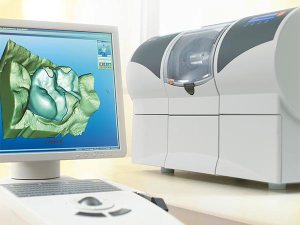
CEREC 3D dentistry

CAD/CAM stands for Computer-Aided Design and Computer-Aided Manufacturing. In dental care, this refers to the use of digital technology to design and create dental restorations such as crowns, bridges, veneers, and more. With CAD/CAM, we can craft precise, custom-fit restorations in-house, often within a single visit, significantly reducing the time and discomfort traditionally associated with restorative treatments.

At Magnolia Dental Spa, Dr. Barker and the team utilize CAD/CAM technology to provide you with high-quality restorations that are tailored to your unique needs, ensuring that your smile is both functional and beautiful.

How Does Dr. Barker Use CAD/CAM Technology?

Dr. Barker’s approach to dental care is all about precision, comfort, and convenience. Here’s how CAD/CAM technology plays a vital role in the services we offer:

  1. Digital Impressions:
    In traditional dental procedures, taking impressions often meant uncomfortable trays filled with gooey material. With CAD/CAM, we use a digital scanner to create highly accurate, 3D images of your teeth. This eliminates the need for traditional impressions and ensures that we have an exact replica of your mouth for designing restorations. The result? A more comfortable experience for you and more precise results for your treatment.
  2. Same-Day Restorations:
    One of the greatest benefits of CAD/CAM technology is the ability to create restorations in a single visit. Dr. Barker can design and mill crowns, veneers, bridges, and other dental restorations right in the office—no waiting for days or weeks for a lab to send your restoration. You come in with a damaged or missing tooth and leave with a custom-made restoration that fits perfectly. It’s a time-saver, and you don’t have to deal with temporary restorations or multiple appointments.
  3. Custom Design for a Perfect Fit:
    With CAD/CAM, the digital design process allows Dr. Barker to tailor restorations specifically to your teeth. The system enables precise adjustments and the ability to plan every detail, from the shape of the tooth to its color and size, ensuring that your restoration looks and feels just like a natural tooth. Whether you’re getting a crown to restore a damaged tooth or a veneer to enhance your smile, the result is a seamless and beautifully crafted restoration.
  4. Durability and Longevity:
    Dr. Barker uses high-quality materials, such as ceramic and zirconia, in CAD/CAM restorations. These materials are not only aesthetically pleasing but also highly durable. With CAD/CAM technology, you can expect long-lasting restorations that can withstand the normal wear and tear of daily use. Plus, because the fit is so precise, there’s less chance of complications like irritation or discomfort, which are sometimes associated with poorly fitting dental work.

The Benefits of CAD/CAM Technology at Magnolia Dental Spa

  1. Faster Treatment:
    One of the key benefits of CAD/CAM is the speed with which restorations can be created. Unlike traditional methods that often require multiple visits, CAD/CAM allows for same-day restorations. You can walk into Magnolia Dental Spa with a damaged tooth and leave with a fully restored, permanent solution—no need for a temporary crown or a second appointment.
  2. Comfort and Convenience:
    The process is more comfortable for patients. No more messy impressions or waiting for weeks to receive your restoration from a dental lab. With digital scans, you get a more comfortable, accurate impression of your mouth, and with same-day treatment, you can have your restoration completed in just one visit.
  3. Natural-Looking Results:
    Dr. Barker is committed to providing dental restorations that blend seamlessly with your natural teeth. CAD/CAM technology allows for precise control over the color, shape, and fit of your restoration, resulting in a restoration that looks and feels like a part of your natural smile. Whether it’s a crown, bridge, or veneer, the high-quality materials used are designed to be durable while maintaining an aesthetic, natural appearance.
  4. Cost-Effective:
    Since we can design and mill restorations in-house, CAD/CAM technology can help reduce costs associated with outsourcing dental lab work. This means that the high-quality restorations you receive are more affordable and can often save you money in the long run.
  5. Minimized Need for Follow-Up Visits:
    With CAD/CAM, the precision of the digital design process means that your restoration is less likely to need adjustments. You can enjoy a perfect fit the first time around, reducing the number of follow-up appointments and minimizing the time spent in the dentist’s chair.

What Types of Restorations Can Be Created with CAD/CAM?

Dr. Barker uses CAD/CAM technology to provide a wide range of dental restorations, including:

  • Crowns: Used to cover and restore a damaged tooth, crowns can be crafted in-office and applied during a single visit.
  • Veneers: Thin shells of porcelain or composite material that cover the front surface of teeth to improve appearance and correct imperfections like discoloration or chips.
  • Bridges: A dental bridge can replace missing teeth, restoring both function and aesthetics.
  • Inlays and Onlays: These custom-made restorations fill cavities or repair damage in a tooth, offering a more natural solution than traditional fillings.
  • Dentures: CAD/CAM technology can also be used to design custom dentures, providing a comfortable and precise fit.

Why Choose Magnolia Dental Spa for Your CAD/CAM Restorations?

At Magnolia Dental Spa, Dr. Barker and our experienced team prioritize your comfort, care, and convenience. By integrating CAD/CAM technology into our practice, we’re able to provide faster, more precise, and more natural-looking results for all our patients. We understand that dental procedures can be intimidating, which is why we’re committed to making your visit as stress-free as possible while delivering the highest quality care.

If you’re interested in learning more about how CAD/CAM technology can benefit your dental health, or if you’re in need of a crown, veneer, or other restoration, schedule an appointment with Dr. Barker at Magnolia Dental Spa today. Experience the future of dentistry with the latest in digital dental care!


Ready for a better smile? Let Dr. Barker and the team at Magnolia Dental Spa guide you through the process of getting a custom CAD/CAM restoration, all in one visit! Your perfect smile is just a scan away.